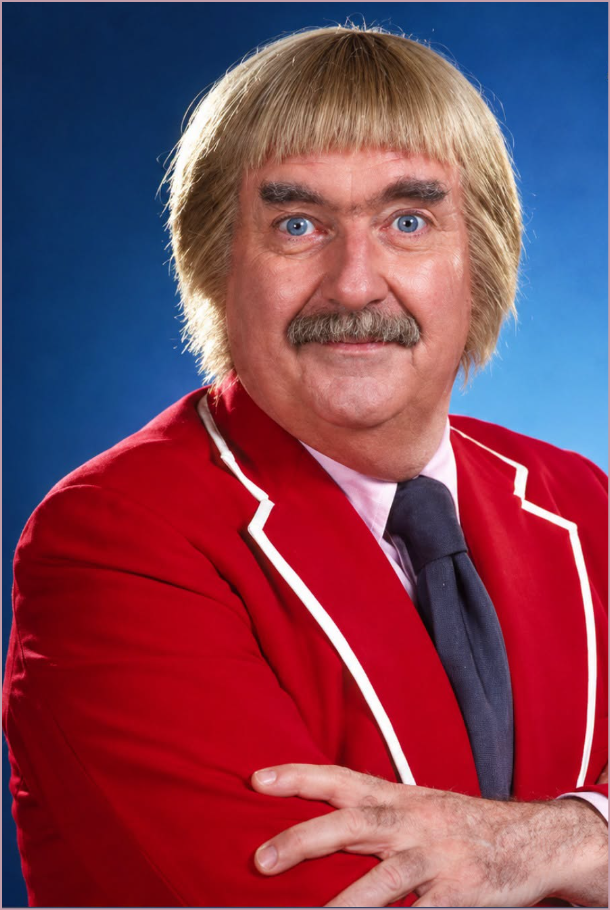
Bob Keeshan, whose full name was Robert James Keeshan, was a beloved American television personality, actor, producer, and children’s educator best remembered for bringing warmth, kindness, and imagination into the homes of millions of American families. He was born on June 27, 1927, in Lynbrook, Long Island, New York, and grew up in a family that helped shape his understanding of childhood, responsibility, and the importance of caring for others.
Keeshan was one of four children born to Joseph Keeshan and Margaret Frances Conroy Keeshan. His father worked in the grocery business, while his mother devoted herself to caring for the family. His childhood experiences influenced the way he later thought about children and parenting. He understood that young children needed more than entertainment; they needed affection, encouragement, patience, and opportunities to discover the world around them.
As a young man, Keeshan developed an interest in broadcasting. While still in high school, he obtained a part-time job as a page at NBC in New York City. This opportunity introduced him to the world of television and helped him begin a career that would eventually make him one of America’s most recognizable children’s entertainers. After graduating from high school in 1945, he served in the United States Marine Corps during the final period of World War II. He subsequently studied at Fordham University, initially considering a career in law before becoming increasingly involved in television.
In 1947, Keeshan began appearing on The Howdy Doody Show, where he became famous for playing Clarabell the Clown. Although Clarabell rarely spoke, his humorous expressions and playful behavior entertained young viewers and helped Keeshan develop the skills that would define his future career.
He later appeared in other children’s television programs, but his greatest achievement came in 1955, when he created and began starring in Captain Kangaroo. The program became one of the most influential children’s television shows in American broadcasting history, running on CBS for nearly three decades in its original form.
As Captain Kangaroo, Keeshan wore a distinctive coat with large pockets and greeted children with a calm, friendly manner. His program featured storytelling, music, educational activities, puppets, animals, and memorable characters such as Mr. Green Jeans, Mr. Moose, and Bunny Rabbit. Instead of relying entirely on loud jokes or fast-paced entertainment, he encouraged children to think, read, explore, and treat others with respect.
His gentle approach made the program feel like a welcoming visit from a trusted friend. For countless families, watching Captain Kangaroo became part of their everyday morning routine before children went to school and parents began their working day.
Behind his public identity as Captain Kangaroo, Bob Keeshan was a husband and father who valued the privacy of his family. He married Anne Jeanne Laurie in 1950, and together they raised three children: Michael Derek, Laurie Margaret, and Maeve Jeanne.
Although Keeshan spent much of his professional life working in television, he did not want his children to grow up believing that their family was defined by his celebrity. He and his wife made deliberate efforts to give their children a normal upbringing, away from unnecessary public attention. His children were not treated as experimental audiences for his television program, and he did not depend on them to determine what he should put on the air.
This decision reflected his belief that children deserved their own experiences, interests, and personalities. He wanted them to develop naturally rather than feel pressured by their father’s fame. His family life remained largely private, and detailed accounts of his ordinary daily routines at home are limited.
Keeshan’s approach to parenting was closely connected to his professional philosophy. He believed that parents had an especially powerful influence on their children’s development and that the way adults spoke, behaved, and responded to children could shape their values for years to come.
His life demonstrated that being a famous entertainer did not remove the responsibilities of being a husband and father. He could be a familiar figure to millions of children on television while still seeking to protect his own children’s privacy and family relationships.
Bob Keeshan’s working life demanded creativity, discipline, and a strong commitment to children’s education. Producing a successful television program involved preparing stories, developing educational segments, coordinating with fellow performers, and helping create an environment in which children could learn through entertainment.
His television personality was deliberately gentle and reassuring. He believed that children should be treated with respect and that learning could be enjoyable rather than frightening or exhausting. Through books, songs, nature demonstrations, and playful characters, he encouraged young viewers to develop curiosity about their surroundings.
Outside his performances, Keeshan also devoted attention to questions concerning childhood development, education, and parenting. He wrote books, spoke to parents and educators, and advocated for better children’s programming. He was critical of television that relied excessively on violence and opposed the idea that television should replace meaningful parental involvement.
In 1987, he joined former Tennessee governor Lamar Alexander in establishing Corporate Family Solutions, an organization that helped businesses provide childcare programs. This work reflected his conviction that children needed safe environments in which they could develop emotionally, socially, and intellectually.
Although the public remembers him most clearly as the friendly captain who appeared on television each morning, his broader work showed that he wanted to improve children’s lives beyond the television screen.
Keeshan’s personal life also included periods of sadness. His wife, Jeanne, died in 1990 according to contemporary obituaries and reports. Her death marked a significant loss after decades of marriage. He continued his work as an author, public speaker, and advocate for children, carrying forward the values that had shaped both his family life and professional career.
In his later years, Keeshan lived in Vermont, where he continued to be associated with children’s welfare and education. His influence remained strong among generations of Americans who had grown up watching his program. Many remembered him not simply as an actor but as a reassuring presence who encouraged kindness, imagination, and good manners.
His memoir, Good Morning, Captain, published in 1995, offered reflections on his career and his experiences in children’s television. Through his public appearances and writing, he continued to emphasize the responsibility adults have to nurture young people and provide positive examples.
Bob Keeshan died on January 23, 2004, in Windsor, Vermont, at the age of 76. His death marked the end of a remarkable life devoted to entertaining, educating, and advocating for children.
Bob Keeshan’s legacy extends far beyond his famous television character. He helped shape the childhood memories of generations of Americans and demonstrated that children’s entertainment could be both enjoyable and educational. His work encouraged families to appreciate books, music, imagination, and the everyday opportunities children have to learn.
His personal commitment to family privacy, responsible parenting, and children’s well-being was consistent with the gentle character that viewers came to love. While millions knew him as Captain Kangaroo, his family knew him as a husband and father who wanted his children to grow up as ordinary individuals rather than public figures.
Today, his contribution to American television remains an important part of broadcasting history. His life reminds us that genuine success is not measured only by fame or professional achievement, but also by the kindness we share, the people we care for, and the positive influence we leave behind.
Bob Keeshan will always be remembered as the man behind Captain Kangaroo—a beloved entertainer whose gentle spirit brought happiness into countless homes and whose devotion to children helped make the world a little kinder.